
Women in the Revolution: Tea and Sugar
Posted on February 25, 2026 by Jenny ONeill
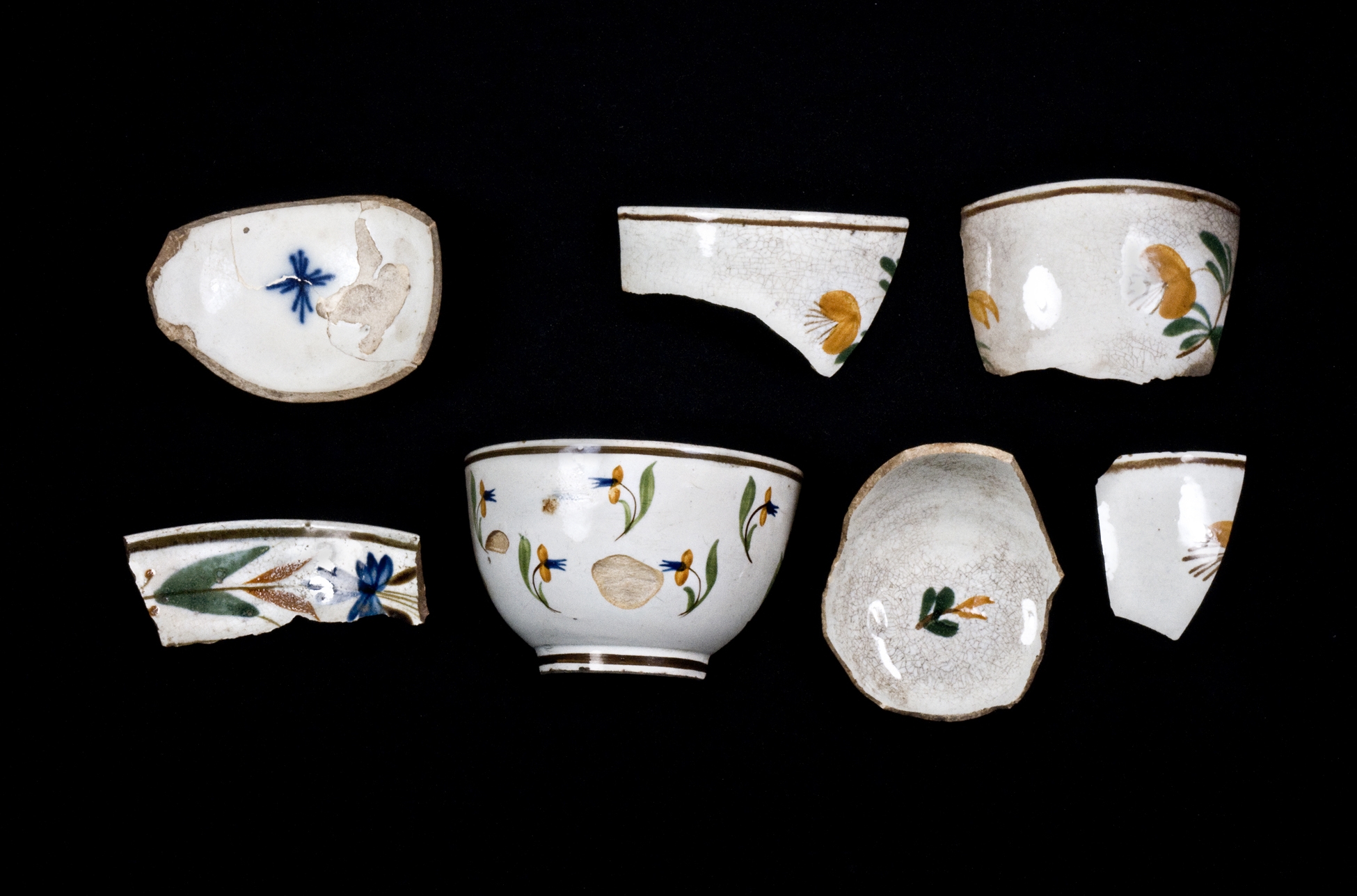
Image: Pearlware from Waite Kirby Potter House
The temptations of prize sugar
Women’s voices are, of course, absent from the Dartmouth town meeting debates. But fortunately, another source provides some insights from a Quaker perspective, into their activities during this era of upheaval. The recently transcribed minutes of the Dartmouth Monthly Meeting of Friends include records of the women’s monthly meeting. Quakers stood in opposition to privateering and to the purchase of goods procured as a result of such activities. However, for some, the temptation proved to be too great, especially when it involved sugar!
In 1777, several women were found guilty of purchasing “prize goods” and the Meeting requested a “paper of acknowledgement” be read publicly by the perpetrators. Abigail Russell admitted that through “unwatchfulness” she “purchased Some of these goods Called Prize Goods which I am sorry for and do condemn.”
Mary Russell, Lucy Howland, and Mary Howland admitted that they “inconsiderately purchased or pertook of some small quantity of those goods called prize goods taken by war and violence…after mature Consideration thereof we do utterly Condemn, and are Sorry for it.”
Katurah Peckham was disowned for her practice of buying prize goods, although the committee expressed a hope that she would “come to a sight of the Evil of Such practices and return and be restored to the way of Truth.” (1778)
Read more: The Minutes of Dartmouth, Massachusetts Monthly Meeting of Friends 1699 -1785, Dartmouth Historical and Arts Society, https://dartmouthhas.org/quaker-transcriptions.html
The unpatriotic pastime of tea drinking
Originally a luxury item, tea gradually became an everyday beverage during the second half of the 18th century. Many ceramic artifacts found on eighteenth-century archaeological sites are directly related to the production and drinking of tea. The practice of making and consuming tea brought with it entirely new social norms and traditions that transformed everyday lives. Both William White and Dr. Ely Handy owned numerous teapots, teacups, a copper tea “kettle”, coffee bowls, and coffee pots. Dr. Handy owned 10 lbs. coffee and 1 lb. of tea on his death in 1812.
Tea and taxes
By the time of the American Revolution, tea was drunk everywhere from the backwoods to the cities. However, tea and tea taxes became a bone of contention between the American Colonies and Great Britain. This led to the 1773 Boston Tea Party, a precipitating event of the Revolution, when angry Colonists destroyed the tea cargo of three British ships by dumping them into Boston Harbor. As a consequence, tea drinking became unpatriotic. Boycotts of tea led to an increase in consumption of other beverages, such as coffee or herbal teas.
The women of the Dartmouth region led the way:
“In January, 1774, fifty seven ladies of the Ladies League Society of Bedford village had a meeting at which they entered into an agreement not to use any more India tea; and having heard that a gentleman there had lately bought some, they requested he would immediately return it. This request he complied with, whereupon the ladies treated him with a glass of “this country’s wine” and dismissed him, highly pleased with his exemplary conduct. A number of men present gave him three cheers in approbation of his noble behavior. This occurred six months prior to the action of the town meeting, and doubt less contributed much in forming the public sentiment of the town.”
(History of Bristol County, Massachusetts, with biographical sketches of many of its pioneers and prominent men, D. Hamilton Hurd)
In July 1774 the Dartmouth (Westport) Town Meeting joined the resistance to British rule voting:
“To save us from bondage and slavery we will not purchase any goods manufactured in Great Britain and Ireland … we will not purchase any foreign tea whatever.”