
Carol Petty Skarbo interviewed by Doris Carvalho
Posted on August 13, 2026 by Jenny ONeill
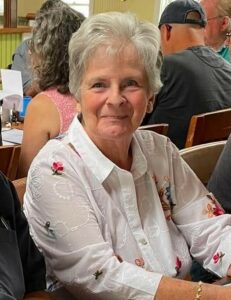
Carol Skarbo 2026
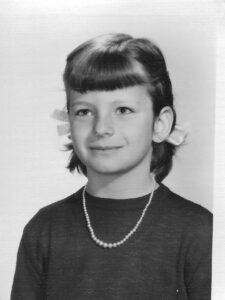
Carol Skarbo 1956
Doris Carvalho
Hi, my name is Doris Carvalho and it is July 25th, 2026 and I am interviewing Carol Petty. Hi, Carol. How are you?
Carol Skarbo
I’m fine, Doris.
Doris Carvalho
That’s good. Ready to start?
Carol Skarbo
I am. Okay.
Doris Carvalho
Your parents were living in Westport when you were born. What are your first memories?
Carol Skarbo
Oh, first memories were when I was very young. I remember the house we grew up on, on Old Harbor Road. We lived there until I was about nine and a half. I remember sitting in a highchair. and my mother feeding me cereal. And also one time sitting in the highchair, I was probably a little older and it was just the most convenient place to put me sitting there eating watermelon. I remember my mother dressing me up in a little sun suit and taking me out to the yard, letting me play. I must have been about three. And the only thing she told me was don’t go near the mud puddle. So I immediately went and sat in the mud puddle. And she came and got me, took me inside and changed my clothes. And I have very clear memories of some of those things. So I think I was probably around two or three with those memories.
Doris Carvalho
Yeah, yeah. Do you remember, I know you have an older sister. Do you remember, does she figure into your early memories?
Carol Skarbo
Oh yes, very big. We’re of the age where you’d go outside in the morning, you’d play outside most all day. And we had what to us seemed like a huge, huge yard. If you go by it today, it’s like a postage stamp. And I can remember sitting out there, I must have been around three, and she would have been about four and a half, making mud pies. We used to have a shed out back, we played in there a lot. And one day we swiped some eggs from the chicken house. and took them inside the shed, and she always liked to play with matches. So she got a frying pan and lit a fire and was trying to cook the egg, and she set the shed on fire. And so my poor mother looked out and saw the shed on fire, called my father, who came up from Westport Harbor where he worked. And he came up with a friend, and they took a hose and put it out. And meanwhile, my sister and I knew we were in big trouble. We went and hid in the tall grass. And they came around and looked for us and looked for us, and they never did find us. But we came out later that evening. And as was often the case, because she was older, she got the spanking, and I did not. I have lots of memories, particularly when she first went away to school. which was a big adjustment for me, probably a bigger adjustment for her. But suddenly I was there all by myself and that was a big change for me. I used to watch her get on the bus in the morning and just wait for her to get off the bus in the afternoon. So yeah, I have lots of memories from that time period.
Doris Carvalho
Yeah, yeah. Did you have any friends in the neighborhood when you were very young in that house?
Carol Skarbo
We did. The Lashes, Gail and Wendy Lash, Douglas, the younger brother, lived about a quarter of a mile down the road. And when we were about, I was probably around five and Diane would have been six and a half, Gail and Wendy were right in between us. Gail was older than me, but younger than Diane, and Wendy was younger than me. And our mothers decided it would be good if we played together. So every Saturday, either Diane and I would walk the quarter mile down the road to the Lash’s house, or Gail and Wendy would walk the quarter mile up the road to our house. So I guess you’d say we’re what they call today free range children. You know, the mother let you out of your sight and trusted you that, you know, four and a half, five year old, and a six year old could walk a quarter mile down the country road and not have any problems and we never did. And we did lots of fun things with Gail and Wendy. Their mother drove, my mother did not. So their mother took us to the beach, took us to Elephant Rock Beach Club, which we enjoyed, and she took us other places. According to Diane, I don’t remember these, but apparently she took us to quite a few places when it was our turn to go to her house. So those were our closest friends. And then when we started school, we met Carol and Paul Brayton, and they lived about a quarter of a mile on the other side of our house. And once in a while, we’d walk up to play with Carol, who once again was right in between our ages. She was older than I was, a little bit younger than Diane. So those are our closest friends. The neighbor, brought his son to live with his father when we were growing up, and he was a 16 year old boy, and he became a great friend. He and his Henry and his dog Spot, and we liked Spot just as much as we liked Henry, so that was our group of friends when we were little.
Doris Carvalho
Okay, your mother didn’t drive, so who did the shopping? Like for food and clothing.
Carol Skarbo
Okay. Those were very pleasant memories. You were tapping into a lot of pleasant memories. My parents went shopping. Together? Once a week together. My father drove, and we went to what was the A&P supermarket, which was on the corner of Plymouth Avenue. And I can’t tell you the intersection of the street.
Doris Carvalho
My mom used to walk there. We lived that way when I was growing up. Isn’t that funny?
Carol Skarbo
Well, if you were there on Saturday. And they were very good shoppers. They would go up and down the aisles, and they would give Diane and I a nickel and send us to the soda machine, and we would buy a single Coca-Cola and share it. Well, they were smart. That kept us busy while we were going up and down the aisles. And they always bought us a treat. There was a little set of lollipops called Jolly Lollipops, and they were Oh, about 12 of them in a package. And there were, you know, the fruit flavors, cherry and grape and orange and all that. And that was our one treat for the week from shopping. So, so, uh, they did that together and that continued, uh, all, all the way through high school. I remember listening to an opera for, for a music assignment. I laid out in the car listening to the opera while they went in and did the shopping, but eventually they started going to Lee’s and, um, so they no longer went into the city for groceries. And then shopping for clothing and all that. Again, my father drove at least part of the way. Sometimes he’d drop us off on Forge Road, where our maternal grandmother lived. House is still there, would love to go inside and see what it looks like today. And we’d walk with our grandmother up to State Road. We’d get on a bus. And we’d go into downtown New Bedford for school shopping or Christmas shopping or things like that. And I still associate the smell of bus diesel fumes, pleasant times, getting out of the bus in the city and shopping. And then other times we gravitated more towards Main Street, downtown Fall River. And those were wonderful shopping days when we were pre-teens and teens. We would go on a Saturday afternoon. My father would drive, until the point where Diane could drive. And then my father was off duty, and Diane would drive us. And we’d park behind Woolworths, and usually we’d split up. unless we were having to try on school clothes with my mother. And it was just a wonderful place to shop by some very pleasant memories from Main Street, Fall River.
Doris Carvalho
Me too. Yeah, yeah. We probably ran into each other a few times there. Probably. Yeah, yeah, yeah. Yeah. So what, you lived there until you were in the line, and then what happened?
Carol Skarbo
I’m sorry, what was that?
Doris Carvalho
You lived on Harbor Road until you were about nine, you said? I was nine and a half, well, not quite nine and a half. And my father worked on the Charlton Estate at Westport Harbor, and he had worked there since the 1930s. This was in the 1950s when I was growing up. And the person who was the foreman of the estate grounds left for greener pastures, I guess. And my father took over the job of the foreman of the grounds of the estate. And in those days, the foreman had to live in the house on the estate. It’s called the gardener’s cottage. Actually has a historic plaque on it. It was built in 1915. And we had to move into
the gardener’s cottage. It was not really a cottage. It was a normal house. It was a three bedroom house and probably about 1600, 1800 square feet, and it was right down on the water at Westport Harbor. And so we moved down there, and my father and Diane were all excited about the move. My mother and I were kind of sad to leave the old house, because it took me a while. But after the first few months, we realized we actually were in a paradise down there, near all the beaches and all that good stuff, and were there until I was I was 20 and married when my parents moved back to Central Village and I moved in with them briefly while my husband was in basic training, and then joined him with our young son to travel as a military wife.
Doris Carvalho
The inn across the street from you when you lived in the gardener’s house, was it an inn at the time?
Carol Skarbo
It was. It’s called the Macomber Inn, and it’s often referred to as the Macomber store. On the lower floor, there was just a small corner store. It was also a post office for Westport Harbor. And you could see its origins. It was originally a livery main part of the building is a large set of double doors where the horses and wagons used to go in and out and then the um I just want to think for a minute the east side of the building is actually a a three-story uh very squared off building it was not part of the original structure it was that structure was originally down right next to the Nubble. You wouldn’t believe there was actually a very large structure. It was a hotel right down near the Nubble. And after the hurricane, I’m going to say it’s probably the hurricane of ’38, they moved that building from down near the Nubble. And how they moved it, I haven’t got a clue because it’s actually a very large building. And that was appended to the inn and the store. And that became the hotel part of it. So it was really kind of like what today we’d call a bed and breakfast. And then when we were teenagers, my sister Diane worked at the counter in the store. She had a five day a week job. Her favorite part was Sunday morning. She had to get up some ungodly early hour and go across the street because they had dropped editions of the Herald News and the New Bedford. standard times. And as you know, if you’ve ever worked with someone that has a paper out, you have to assemble them. You have to put them all together. So her job on Sunday mornings was to get there early and to put the papers together, put them out for sale. And then I worked upstairs in the kitchen, in the bed and breakfast part. I was the waitress. And people were always amazed. They’d have breakfast upstairs and they’d come downstairs and see my sister and say, How did you get down here so quickly? Because we looked quite a bit alike in those days and still do to some people. So that was our summer job from the time, probably about 14 or 15 until 18 or 19.
Doris Carvalho
Were the gas pumps working at the time?
Carol Skarbo
Yes, and my sister was very proud of herself because she used to pump gas from the old pumps because you didn’t do it yourself back in those days. Now I remember. Yeah, and so she knew how to work them and pump gas, and I thought it was a pretty cool skill back then. Yeah, it all worked.
Doris Carvalho
Do you remember Hurricane Carol?
Carol Skarbo
Yes, I do. And that was in 1954, so we still lived up on Old Harbor Road. And two things about it. I remember very gusty wind and pieces of tar paper were blowing off the roof. And you’d pick up a piece of tar paper and it would actually waft you into the air. And that was great fun that afternoon. And I guess the second thing, when I go back now and I read things like Red Cummings’ book on Hurricane Carol, is I’m amazed at what a non-event my parents made of this. Because when we read about what happened down at the harbor, there were many, many houses were destroyed. There were no lives lost at the harbor. I think there was one lost maybe at the point. somewhere at the point, but it was really a big deal in terms of the damage down at the harbor, and yet my parents kept a lot of things from us as children. I had no idea it was that big or traumatic event.
Doris Carvalho
Right, because you would have been about five or six.
Carol Skarbo
I would have been about five, yeah. Well, I would have been six in 1954. Yeah, yeah. So there was no damage to your house? Other than tar paper coming off. And you were far enough away from the water.
Carol Skarbo
Yeah, the house on Old Harbor Road is probably as the crow flies, about three miles from the water. Yeah, so we didn’t see any effects of the water. And there was a little bit of tree damage, but nothing, nothing that was terribly memorable.
Doris Carvalho
What was the, how old were you when you went to school?
Carol Skarbo
I would have turned six the previous May, and I would have been six years, three months in September, when I started first grade. Went right into first grade, there was no kindergarten,
Doris Carvalho
no– I did not go to kindergarten either.
Carol Skarbo
No, went right in, and the first—
Doris Carvalho
Which school was it?
Carol Skarbo
It was at Westport Point. It was two classrooms, and each of them was a double classroom. There was a first and second grade with, let’s say Evelyn, I don’t know if I have the right name, Evelyn Tripp, and a second and third combined grade, Mrs. SIlkington, I think, was the name of the teacher. And I was in the first and second grade, and Diane was in the second and third grade in the two-room classroom. And I remember the first day of school, Ms. Medeiros said, Can anybody say the alphabet? And I raised my hand and said, I can say it backwards. And I whipped it off backwards, and she just went very silent. I was rather surprised. So I remember that pretty well.
Doris Carvalho
So you went for second and third grade there?
Carol Skarbo
No, I went only in first and second grade. And then for third grade, I ended up going to the Earl School. And that third grade was the only grade in grades one through six, where I was in a single classroom, just the third grade by itself. All of the grades were mixed grades. When I was in fourth, it was a third, fourth, and when I was in fifth and sixth, it was a combined fifth, sixth. So I was always in split grades, with the exception of third grade.
Doris Carvalho
So how did they handle a split grade? Did they like put the second grade on one side and the first grade on the other side.
Carol Skarbo
They’re in the same room and you just, depending on how many were in the room, you might have two rows in sixth grade and three of fifth or just the opposite. And the teacher would do a lesson, let’s say, I remember one on long division. She’d do long division with the fifth grade. And meanwhile, the sixth grade would be working on the reading assignment. And then she’d go over and do something in the sixth grade, and you would have a paper or something to do with the math assignment. So it’s probably a lot tougher on the teacher than just teaching a single grade. But the thing that I liked about it is one teacher that I had was Mrs. Thibeau. She said, if you’re interested in what we’re doing over here in the other grade, Just stop what you’re doing and listen. That’s perfectly okay. And that saved me from a lot of boredom in those grades because lots of times it was more interesting than what the other grade was doing. So you could stop and listen and know that that was okay and you weren’t going to get into trouble for it.
Doris Carvalho
Right. Do you think that hurt you academically? helped you or maybe made no difference?
Carol Skarbo
I think it made absolutely no difference. Okay. Yeah, I think it worked out just fine. And it’s hard on the teacher, I’m sure, but they pulled it off pretty well.
Doris Carvalho
So you took a bus.
Carol Skarbo
We took a bus. We were one of the first people on Old Harbor Road. We were some of the first people to get on the bus. Although I learned later when we moved to Westport Harbor, they were the very first people to get on the bus. And it seemed like a very long ride. We’d go up from Old Harbor Road, we’d come through Adamsville, we’d go up Cornell Road, and then we’d go down to the Point School for the years when we were in West Point School. And that wasn’t so bad. The worst part, though, was in the winter, because the bus would leave at about 3:10, leave school to take you home. And I used to sit there and watch the clock. I didn’t much care for school until junior high. I just couldn’t wait to get home and go outside and play. And I’d be watching that clock and watching the clock until it was about 3:10. We’d get on the bus, but the reverse trip was very long, going back down Cornell Road and then down along the harbor, and then finally letting us off last on Old Harbor Road. And I’d barely have 15 minutes outside to play before it was dark in the winter. So it was a long, long bus ride for a little kid. Yeah.
Doris Carvalho
Did you get a lot of homework? When you were young
Carol Skarbo
. I don’t recall ever having any homework at all until seventh grade and of course Diane went first and I remember the first week of seventh grade, which is still pretty nice. We’re at the harbor at this time and it’s beautiful outside at the harbor in September and of course you We wanted to just get home, get off the bus, and run down to Charlton’s Wharf and go swimming. But she had to go out. She sat on the screened-in porch with this huge pile of books and did the homework for hours. And that was my first introduction to the concept of homework. We hadn’t had any at all. in grammar school. And then suddenly in seventh grade, you have homework and four or five subjects, and it took her hours. And then two years later, when I hit seventh grade, we had the same thing.
Doris Carvalho
And where did you go to seventh grade at school?
Carol Skarbo
Seventh grade, that was one of the classes that went to the former high school. There was a couple of classes, one from the Earle school and one from the Macomber School that went to the high school and then there were three more classes in seventh grade and they ended up at the head school because there wasn’t room enough to have them all at the high school. So we had two seventh grades at the high school. Of course, a lot of this was easier for me because I had the older sister two years ahead of me. So it wasn’t as intimidating as it might have been to a seventh grader just stepping into that situation without an older sibling. But it was kind of cool. The classes were fairly separate. You didn’t mingle too much with the upperclassmen. Seventh and eighth grade kind of were in their own little world, mostly on the lower floor. And so you were there through high school. Through high school, all six years, yeah.
Doris Carvalho
I mean, there recently in the past, a fairly recent past, when they had seventh and eighth grade at the old high school and there was a lot of talk about how it was going to hurt the kids. There was a big movement to build a new school because they did not want to integrate the seventh and eighth grade high schools because it would be a bad influence. Did you think it was a bad influence?
Carol Skarbo
Not at all. In fact, we probably looked up and somewhat worshipped kids that were juniors and seniors. They looked like adults to us, you know, young women and young men. And I don’t remember any. I don’t remember a lot of interaction at all, except maybe on the school bus. Sometimes you get to know some of the old kids. kids going to and from on the school bus. We got to know Paul Brayton, our neighbor, and Rick Desjardin. That’s how we first met him, as an upperclassman on the school bus. And they were never anything but kind. So, I mean, it wasn’t like you were encouraged to go outside and smoke or anything. We didn’t have a lot of interaction with the upperclassmen, and what interaction we had was not at all. intimidating or damaging in any way or a bad influence in any way. Yeah. But these are days before drugs and years before they were widespread. And probably the worst thing that could happen is you’d know a girl or two that smoked and got caught smoking in the girl’s room. That was probably about the extent of it. Yeah.
Doris Carvalho
Yeah. Any teachers stand out in your mind? Anything that happened with the school that stands out.
Carol Skarbo
I think one thing that stands out is what a good education I got, to be honest. I had a lot of good teachers that I enjoyed. In junior high, it was Mr. Marchand for English, who sent me home and told me to practice my handwriting every night, but finally gave up on it. And math, we had Barbara Burris, who later became Barbara Belden, and I can remember First two weeks of algebra in seventh grade, you m you might as well have been talking Greek to me. I didn’t get it at all, but then the light bulb went on. Alice Hearn in English, ninth and 10th grade, I owe to her, I think, ability to do public speaking. As much as I hate it, I believe being taught that in the junior and high schools was a great, advantage.
Doris Carvalho
You were in a public speaking contest, weren’t you?
Carol Skarbo
I was, as a freshman. And we had to write an essay, America’s Gravest Danger. And they took the written essay and chose the top ones. And I guess three or four of us in the freshman/sophomore division and three or four in the junior/senior. And we drew straws who would speak first. and I drew the last straw. And so I had to sit up there on the stage, great anxiety. I remember I couldn’t keep my knees still, my legs were shaking so much. And so it finally came my turn and I got up and I gave my speech. I was about halfway through and the dismissal bell rang. Now today if that happened, and this is kind of a bad thing, kids would just get up, blow you off and walk out, school will be done, the bell rang. these kids sat there quietly, bell went through, everybody was quiet, I finished the speech, and that was it. It was a very different time than it is today in that respect. I won first place in freshman and sophomore.
Doris Carvalho
I don’t remember that. I was in the contest . I don’t remember how I worked out.
Carol Skarbo
Yeah, I won the first place.
Doris Carvalho
You won first, so I guess I didn’t win first.
Carol Skarbo
That year. I guess they had something subsequent years, but I didn’t have to participate, thank goodness. I think I only did it one year.
Doris Carvalho
Yeah, maybe they went to a different format. Right. For the purposes of the tape, Carol and I were in the same class.
Carol Skarbo
We were. I met Doris in the seventh grade, and that was probably a landmark experience, because she came from the Macomber School and immediately there was a liking with Doris. Was Diane there also? Yes. Yeah. And my friend Barbara Gonet, we all got along really well and became friends and became friends for life. So that definitely was a highlight of the junior high years. And as we integrated with the kids from the Macomber School, many of us became close friends.
Doris Carvalho Right. Do you remember the Kennedy assassination?
Carol Skarbo Oh yeah, yeah.
Doris Carvalho
Do you remember what you were doing? Yes, we were in school, we were passing in the halls, I was a sophomore, and the announcement came on the loudspeaker to return to your homeroom. Well, we knew that wasn’t good. So we returned to our homeroom, so I was in Mr. Rego’s homeroom in 10th grade. And he said that’s when they told us is that the president had been shot. They did not tell us he had already died. And so the buses came and took his home. And that’s when we found out he had died. And then school was called off. I think this might have been on a Thursday, a vague recollection, I don’t know. And so school was called off for the rest of the week. And like most of the families, we sat moved to the television watching the funeral and all the things that went on with it. And the replay of Oswald being shot by Jack Ruby. So I think that scenario played out over most households in the nation.
Doris Carvalho
Do you remember when you got your first TV, your parents?
Carol Skarbo
Yeah, it was in the mid-1950s. It was probably about 1953, 1954. It was very small. It was black and white. And the best things on it were Hopalong Cassidy and The Lone Ranger. And so Diane and I would watch Saturday morning TV. My mother liked it quite a bit. She was a reader, but she also took to TV quite well. And both my mother and father liked to sit there and watch typical shows, they liked the Kate Smith show, she was a singer, there were a lot of playhouses, fairly serious, good quality dramas on in the evening. I remember them sitting down and watching that a lot together, and that was something that remained a constant for the remainder of their marriage. In the evening, they always liked the same shows. Later on, it was Bonanza and Gunsmoke and Ed Sullivan. Ed Sullivan, we watched that as a family. That was a little later on, but early on Diane and I just watched Saturday morning and it would usually be Hopalong, Cassidy, the Lone Ranger, and then eventually the Disney franchise came along. We had good shows like, oh, the Mouseketeers, how can I forget that? The Mouseketeers, the Mickey Mouse Club. The Mickey Mouse Club. And the kind of the stories that went on multiple weeks, like Old Yeller, Spin and Marty. Oh yeah, we were very good fans of all of that.
Doris Carvalho So, in your neighborhood, you really didn’t have a lot of kids in the area?
Carol Skarbo
Not at the harbor. In the summer, we had a lot of kids down there. different class. This is wealthy people coming from the cities and sometimes long away. We did have some friends. We had a good friend, Nancy Nelson, who we met, it was probably fifth or sixth grade, and from fifth or sixth grade on through seventh and eighth, we were almost inseparable, the three of us, my sister, Nancy, and myself. We used to play Canasta. We used to sit in the living room and play Canasta. We used to go to the beach a lot. And Nancy was responsible for Diane and I first getting an allowance. We didn’t get an allowance, but Nancy would take us to Macomber’s store every day and put an ice cream cone for each of us on our grandfather’s account. So my parents didn’t like the fact that she was treating us every day, so that’s when we started getting a weekly allowance with this Nancy. And then later, I always like to say, as we became 15, 16, Diane and I worked. We entered the world of working teens, where Nancy and some of our other friends continued to be summer residents of the harbor, whose lives were filled with the Acoaxet Club and tennis and swimming and all that, whereas Diane and I ended up being working teens. We also are still good friends with the Johnson family. The first winter we were there, a family named Johnson from Belmont built a house, started building a house directly across the street from us. And it’s actually owned by one of the brothers. There were six kids. The one that owns it now is the middle brother, Peter Johnson. But when we were kids, they would come down on the weekends while the house was being built. And again, they spanned ages. Diane was the oldest. I think I was the second oldest, and then David was just a year younger than I am, and Betsy was two or three years younger than I am. We became really good friends every weekend when they came down. And we used to play hide and seek, endless games of hide and seek out on the rocks behind the house. And we actually remained friends with David and Betsy to this day.
Doris Carvalho
In the winter, to go skating?
Carol Skarbo
Oh boy, yes. several places, Coakset Pond, which hardly freezes over today. It used to freeze very hard almost every winter, and you’d go out on the pond and you’d look down in the ice cracks, and even six inches deep. It was very, very deeply frozen, and people would come from the cities all around. It’s a huge, huge pond, and very often it was as smooth as glass, and so that was a big activity in the winter. The other place we would go skating is there were some marshes at the foot of our driveway, right between the… edge of the Charlton Estate in Boathouse Row and the corners of those two fields filled up with water and it was all interspersed with grass, marsh grass throwing through the water. But you could skate on it and so we would go down there and skate around. And then we used to slide around. There used to be a terrific puddle right across the street from our house while we were waiting for the bus. Unfortunately, Diane fell one day and she split her knee wide open. Well, did we go home and get bandages? Nope. Get on the bus. And got a couple of bandages from the bus driver and doctored up her knee. And she had some pretty good scars on that knee from it. About two weeks later, we were out playing around on that puddle again and she fell and she cut open the other knee. And so the scenario played out on both knees. And so she has scars from that, too, to go.
Doris Carvalho
Did your parents go swimming and skating with you?
Carol Skarbo
When we were little, when we lived on Old Harbor Road, there was a pond deep in the woods called Peter’s Pond. And my father would– it was probably two-tenths of a mile from our house. He would go with us the first of the season. and he would jump all over that pond. And it probably wasn’t much more than a hundred square feet. And he would jump all over it to make sure it was solid enough to skate, and he would show us where there was black or open water and tell us you had to stay away from that. And then he would leave us, six and eight years old, two little kids, on the pond, all by ourselves, skating. And we never had any difficulty there. One day we were going in there with our skates and we heard this voice talking to us, and that kind of creeped us out. And so we turned around and started to run home, and the voice said, Diane, Carol, come back. Come back. And Diane told me it was the voice of experience. But my father maybe put on skates once or twice with us on that pond. My mother didn’t. My mother was not an outdoor person. Once we got to the harbor, I don’t recall my father ever coming to Coakset Pond with us. We were kind of on our own swimming when we were little children. This is one of the joys and one of the ways Westport is really, really different today. When my father would get home from work and we’d have an early dinner, He would bundle us up in the car, and we’d all go down to Westport Harbor, and he would park right on Atlantic Avenue, right near where the driveway to Coakset Pond is today. And you could park on the side of the road. And these were all public beaches then. There was a small area that was the Elephant Rock Beach Club, but the rest was public. And the thing is, often access to public beaches is restricted because there’s no parking. But you could park on the side road and we’d all go down. My mother would come with us, but she never stepped in the water. But my father would go in the water with us. He really enjoyed it after working outside in the heat all day. And I remember him picking me up on his shoulders and jumping through the waves and carrying me over the waves. So that was kind of a fun thing. That would have been when we were probably six, seven, eight years old.
Doris Carvalho
Okay, let’s see what else we’re going to do. I’m going to pause for a sec. Just give us a break. We’ve been talking for a while. Okay, we did the Kennedy assassination. We talked about swimming, your neighborhood. We didn’t talk about holidays.
Carol Skarbo
Oh, you’re hitting all the good memories. Who made the script? It hits a lot of memories, that’s for sure. Yeah. Okay, let’s go again.
Doris Carvalho Okay, we’re recording again. Do you remember the Blizzard of ’78? Well, you weren’t living here, were you?
Carol Skarbo
I wasn’t living here. In 1978, I was in Massachusetts. I was in Amherst, Mass, where my husband and I were both getting a master’s degree. It did snow pretty well in Amherst, Mass too. .
Doris Carvalho
Did you have any holiday traditions with your family? Like Christmas or Thanksgiving or Easter? Any special traditions?
Carol Skarbo
Yeah, very much so. My parents, we were very poor growing up. I never knew it. And my parents did an incredibly wonderful job making holidays pleasant and memorable for us. When we lived on Old Harbor Road, the tradition on Christmas Eve is we would write our Christmas list and we’d put it under the door that went upstairs to an attic. And that’s where Santa was going to pick up the list. And then I remember decorating the tree, and I would actually do that with my father, with the old-fashioned C7 lights, C9 lights. I still remember the smell of those lights on the Christmas tree branches. And he was very smart, because he taught me how to put lights on. And by the time I was 10 years old, that was no longer his job. That was my job, to put the lights on the Christmas tree. Christmas morning was always a wonder. The gifts were just wonderful. My father had a couple of his co-workers down at the harbor that gave us the most beautiful dolls we have ever seen. Somehow they took pleasure in giving his daughters these lovely, lovely dolls. I remember one Christmas sitting there playing with a toy. It was a little musical merry-go-round. And I happened to be very sick at the time. I had scarlet fever. I remember playing there on Christmas Day and not feeling really great, but being cheered up by this wonderful little merry-go-round toy. When we get to the harbor, Christmas continued to be a wonderful time. We no longer believed in Santa Claus, of course. And my parents were really creative and excellent gift givers, having moved to the harbor. The first year we were there, we got fishing poles. And to a 10, 11, 12 year old kid, that’s a great present. And then we got some pretty lamps for our rooms. At the harbor was the first time we had each had our own bedroom, which was a big thrill. And we each got a very pretty frilly lamp to go in our bedroom. And then when we had opened all our gifts and we were very happy, My father came in and said, Look what Snuffy brought up. Well, Snuffy was our dog, and we had no idea what he had brought up. So we went out in the yard, and there were two shiny new bicycles waiting for us. He had hidden them down in the barn, which was at the base of our driveway. And while we were working, you know, opening our presents and enjoying them, he snuck down to the barn and carried the two bikes up and put them out in the yard. That was a pretty cool Christmas. Other holidays. I don’t remember a lot about Thanksgiving. I do remember Easter. My mother used to hide jelly beans, and that was great fun. We always had a little Easter basket, and we had really pretty little outfits, and little girls used to wear cute little hats back in those days. I had pictures of us going to Sunday school with these pretty little hats on. and of course we had an Easter basket and all that good stuff. The 4th of July was fun but it was a little bit frustrating because my dad worked of course most days but he was off on the 4th of July and he always used that day to do a lot of the yard work and so we were always Very anxious, was it time to go to the parade? Was it time to go to the fairgrounds? And we would be out there working in the yard. And then finally, we would all get in the car and go up to Central Village and sit in the Quaker churchyard and watch the 4th of July parade. every year. And then at night we would go to the fairgrounds and play the games and ride ponies and eat candied apples and watch the fireworks display really, really up close where you could smell the smoke and hear all the noise, which was very enjoyable. So they had a knack for doing holidays and they continued to have that the whole rest of their lives, even as adults when I was going to college. Come Valentine’s Day, I’d get a little heart filled with chocolates in the mail. My college mates on the floor didn’t get stuff like that, but my mother was behind it, I’m sure, all of it. And so even going away to college during GLs, remembered the holidays, and we’d do something special that was really appreciated.
Doris Carvalho
Did you go to church regularly?
Carol Skarbo
When we were little, we went to the Friends Meeting in Central Village. My father’s mother was a member of that church, kind of by accident. She had belonged to another church that was on the corner of Handy Hill Road and Main Road, and I don’t remember what it was called, but it burned down, probably in the 20s or 30s, and she wanted to find a church that was close enough to walk to, and the Friends Church in Central Village fit that description, so she became a member of the Friends Church. My mother wasn’t raised in a terribly religious background, but my father, I think maybe out of a sense of obligation, thought that we should be. And so we went to the Friends Church in Central Village until I was a sophomore in high school. And I remember doing little church programs. Going in there today, I can see where we used to stand up on the little stage at the back of the church. had little lighted candles and sing Christmas carols and all that stuff. But it never really spoke to me or resonated with me. To be honest, I found it kind of boring, particularly when they would take us up for Sunday school lessons. I found it really boring. And then my sophomore year of high school, I came down with whooping cough and I was very, very sick. And I stayed home from church for a number of weeks and I never went back.
Doris Carvalo
Your parents grew up in Westport?
Carol Skarbo
They both grew up in Westport. My dad grew up on Main Road in the house owned by Arthur Pettey. It’s actually a historic home. It was the home of Henry Pettey the Whaler. Henry Pettey was my father’s grandfather, so I guess that makes him my great-grandfather. And it has a historic plaque on it. It was a very small house, probably just a couple of rooms downstairs and very, very tiny bedrooms upstairs, no indoor bathroom, no plumbing until the 1960s. And that’s where he grew up. And actually, my cousin lives there today, so that house is still in the family, although it’s been upgraded significantly. an addition and it has plumbing. My mother grew up on Forge Road, lived there all her life until she got married. It was a carpenter’s home. Her father was a carpenter. In fact, he is the one who designed and managed the construction of the ship that’s in the Whaling Museum. I think it was Lagoda. He was the carpenter behind that. And he was so skilled, he actually rebuilt a Stradivarius violin at one point in time. My grandmother, my mother’s mother, was French-Canadian. She came down from Canada in the 1920s and worked in the mills in Fall River and then got married and They moved into the house on Forge Road, and they lived there until he died in the 1950s. And then she couldn’t afford to keep it. She couldn’t afford to support her house, so she moved in with her sister up on Beeden Road, which is where she lived for the rest of her life. So both parents grew up in Westport. They met each other probably. They talk about the factory school, and I think that was seventh grade, and then they went to their head school, eighth grade, I think. And then when Milton Earl School opened, that was actually their high school, and they were in classes together. And I think it’s kind of funny because first, second year of high school, my mother was the secretary and my father was some other class officer in the third year. She became something else and he became the secretary. They swapped positions and they were both in the drama club together. I had some of their playbooks, I think I stole them, where they each have their lines underlined in the school play.
Doris Carvalho
The historical society might be interested in that.
Carol Skarbo
I’m not sure where those would be. I have a few boxes of memorabilia like that, but that spoke to me, the playbooks, and I do think I kept those. And then they didn’t really date in high school, but it was quite obvious he had a crush on her. She was the president of the cleanup committee, and I guess this is a committee that after dances would clean up and put everything back, and he was the worker on the cleanup committee. So we kind of followed her around all through high school, so there must have been some attraction there, and they got together in their mid-twenties, they were older, and he was drafted, he was in the army, he came home on leave for two weeks, they got married. They got married, they had two weeks together and she didn’t see him for another 39 months where he was stationed in Iceland. We still had the letters that they wrote back and forth to each other for three and a half years. Interesting, yeah.
Doris Carvalho
Now, you left to go to college and basically lived other places, yes, until How many years ago?
Carol Skarbo
I came back to Westport in 2017, 2016. I came back in 2016 through our class’s 50th year reunion, and my sister had moved into the condos at Village Way, across from Lee’s Market in Central Village, and the condo next door was available for sale. And although we’ve been apart for many years, my sister and I always kind of wanted to be back together. So I talked my husband into putting an offer on the condo that was for sale right next door to my sister. I don’t know how I did that, because he’s a West Coast person for life, and we both loved the West Coast. It’s not like we were trying to get out of it. But he said, Well, go ahead and put an offer on it. And I did, and we got it. And we just packed up everything and moved to the west coast, arrived in March of 2017. So I was away probably from the time I was 20, until I would have been 68 when I came back.
Doris Carvalho
How do you think Westport’s changed over the years? I mean, you were gone so long and you were nowhere close, though I assume you visited occasionally.
Carol Skarbo
Oh yeah, usually twice a year.
Doris Carvalho
But I mean, moving here, how do you think the town has changed for the better, for the worse?
Carol Skarbo
I think I’d probably say life is not as simple as it used to be on the surface. One of the things that pleased me a lot when I first got back here is I could still walk places I walked as a child, and visibly it wasn’t much different. I could go down to the harbor, and there might be a few new houses, and walk the streets down there and the beaches, and it was just the same. I could walk in my neighborhood and just, you know, a couple hundred feet from my front door, it’s woods. It’s all woods with birds and streams and all that. So on the surface, it looked very much like it did when I was a child. But what you don’t see until you go down some of these side roads, you go down Charlotte White Road today, and it’s all of these streets going into what was just woodland when I was growing up. and the streets were very big. I would call them McMansions in many cases, on almost every road. The first time I went down Sodom Road after coming back, I was speechless. There used to be just a couple of farms, a few farms on Sodom Road, and just fields and wide open, and now there’s some incredible houses. on the stretch between Charlotte White and Adamsville Road. So on the surface, some things look very much the same, like Westport Harbor and just being able to go a few hundred feet in any direction and being into the woods. But in other ways, when you go beyond the surface, it has built up tremendously, probably four times larger than it was when it was in elementary school. I never was political, I was never attuned to the social scene or the political scene as someone who was 16, 17 or even 19 or 20 getting married. So I can’t comment on how it may have changed in that way. I think it’s stayed much the same as there’s certain people and factions that are in, there’s certain people and factions that are not in, and I think that probably has not changed much since I was growing up and it was probably pretty much the same even back then in that respect. Yeah.
Doris Carvalho
Well, let’s see. Anything else you’d like to talk about?
Carol Skarbo
Nothing comes to mind.
Doris Carvalho
Any memories you have of Westport would like to share? Memories of people?
Carol Skarbo
Memories of people? Probably for another day. Lots of memories of a lot of different people. and good times in Westport. Obviously, I came back because I loved it.
Doris Carvalho
And you have a lot of family here because of your grandparents lived here. And even farther than your grandparents. Yes, I have. They were some of the original settlers, weren’t they, in Westport? Pettey’s.
Carol Skarbo
Pettey’s, not so much Pettey’s, but Brightman family, which was my paternal grandmother who married the Pettey. Well, certainly Pettey’s with Henry Pettey, the whaler. Brightman’s who came from Allens, and so they were long-term Westporters. My grandfather, my mother’s father, Wood, I believe, was working in the New Bedford area, and of course his wife, my grandmother, was from Canada. And so they’re not so much natively entrenched in Westport as my father’s family. We are very fortunate we have very close cousins on my father’s side. We have probably is a group of about 12 of us, counting the cousins and their spouses that are within a 10-year age range, and we’re all very close and get together frequently. My mother’s side, we have, there are six children in that family. She had a brother, and there were six children. One was deceased, but the other five are also with a reasonable age range of Diane and myself. They are more scattered. Some live in Maine and New Hampshire, one lives in Oklahoma. But we do get together periodically. They will return to Westport because their mother was from Westport. And we often see them around 4th of July at the parade and things of that nature. And I think our parents would have been extremely pleased that we keep in contact with all of these cousins on all sides and they’re all good people and they all like each other. That’s great. Okay, so we’ll call it.
Summary:
Early Life & Childhood
- Memories & Upbringing: Carol grew up in Westport, MA, on Old Harbor Road with her older sister, Diane. They were “free-range children” who spent days playing outside and making mud pies.
- Family Routines: Weekly family trips to the A&P supermarket included sharing a single Coca-Cola and getting “Jolly Lollipops”. Bus trips into downtown Fall River and New Bedford were common for clothing shopping.
Move to Westport Harbor & Summer Jobs
- The Gardener’s Cottage: At age nine, Carol’s family moved to the Charlton Estate’s 1915 “gardener’s cottage” after her father became the grounds foreman.
- Macomber Inn: As teenagers, Carol worked upstairs as a waitress at the Macomber Inn bed-and-breakfast, while Diane worked downstairs assembling newspapers and pumping gas.
Schooling & Notable Events
- Education: Carol attended split-grade classes at Westport Point and Earl School before completing 7th through 12th grade at the former high school building. She won a freshman public speaking contest on “America’s Gravest Danger”.
- Major Events: She remembers the wind pulling tar paper off their roof during Hurricane Carol (1954) and being sent home from school when President Kennedy was assassinated in 1963.
Family Roots & Return to Westport
- Local Heritage: Both of her parents grew up in Westport; her ancestral roots include whaler Henry Pettey and a carpenter grandfather who helped build the Whaling Museum’s Lagoda.
- Return Home: After living away for decades as a military wife and moving to the West Coast, Carol returned to Westport in 2016/2017 to live next door to her sister. She notes that while nature and the harbor remain familiar, modern “McMansions” have replaced former farmlands.