Did Lafayette’s soldiers visit Westport during the Revolutionary War?
Posted on January 27, 2026 by Jenny ONeill
Westport’s Revolutionary Stories
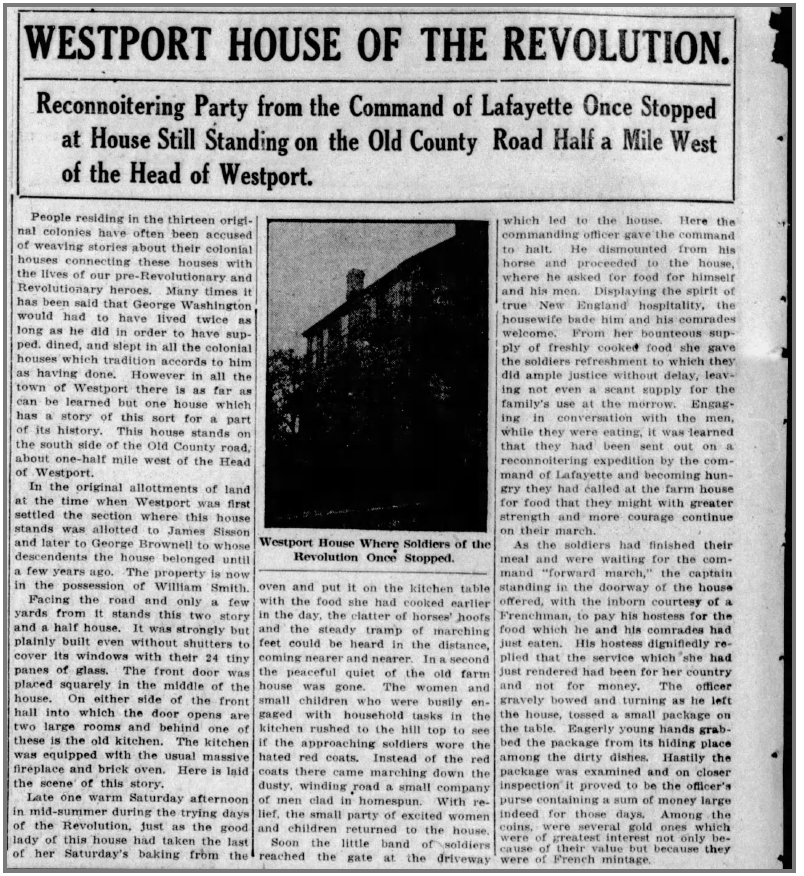
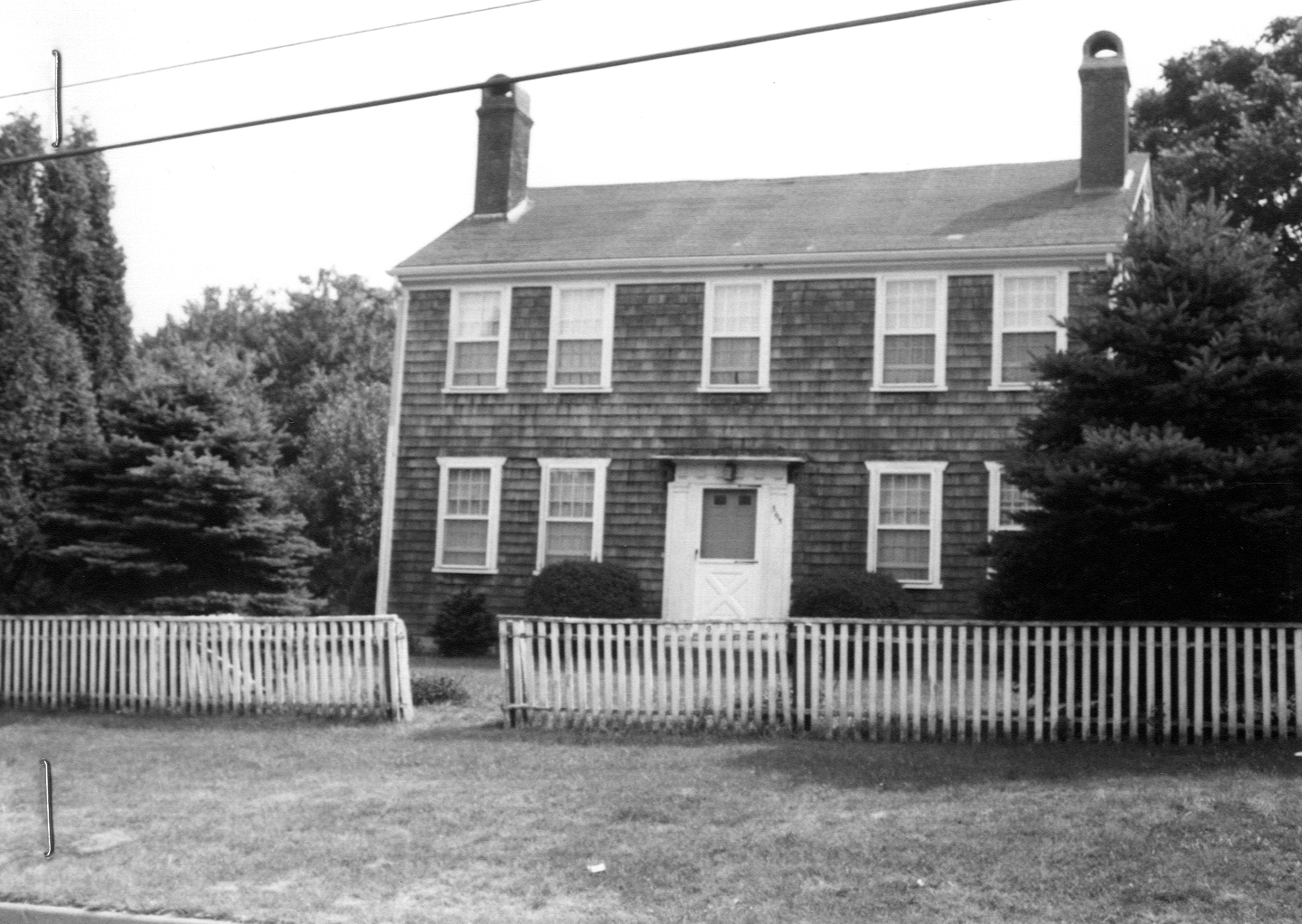
This story of French soldiers stopping for refreshments at 365 Old County Road appeared in a newspaper article and has been retold over the years, appearing in Eleanor Tripp’s notebooks and in the articles written by Gladys Gifford Kirby. The original source is not known. However, a similar story was related by a family who lived near Cedar Dell. Supposedly their ancestor, Mary Gifford, spoke about Lafayette , describing how his troops rode by her house. (Dartmouth: The Early History of a Massachusetts Coastal Town by Beverly Glennon P.196).
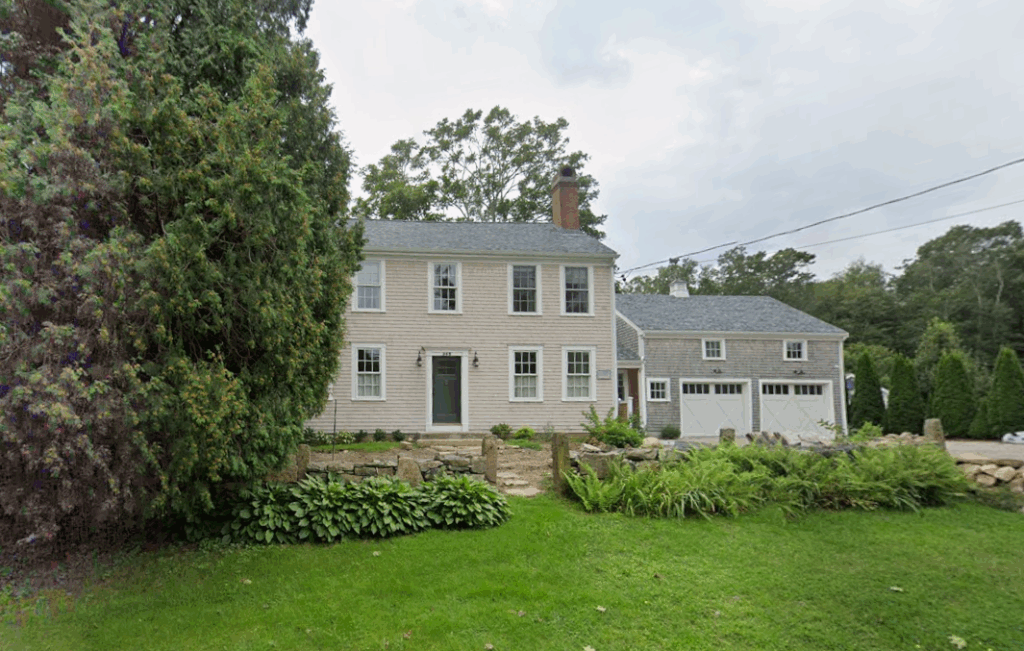
365 Old County Road, Westport MA
Although the full details of this story may never be definitively confirmed, it is grounded in historical fact. In 1778, during the Battle of Rhode Island, General Lafayette and his troops did indeed move through this region (Tiverton, Little Compton, and Westport) while coordinating with French naval forces.
New Bedford Standard Times Dec 19, 1915
WESTPORT HOUSE OF THE REVOLUTION
Reconnoitering Party from the Command of Lafayette Once Stopped at House Still Standing on the Old County Road Half a Mile West of the Head of Westport.
People residing in the thirteen original colonies have often been accused of weaving stories about their colonial houses connecting these houses with the lives of our pre-Revolutionary and Revolutionary heroes. Many times it has been said that George Washington would have had to have lived twice as long as he did in order to have supped, dined, and slept in all the colonial houses which tradition accords to him as having done. However in all the town of Westport there is as far as can be learned but one house which has a story of this sort for a part of its history. This house stands on the south side of the Old County road, about one-half mile west of the Head of Westport.
In the original allotments of land at the time when Westport was first settled the section where this house stands was allotted to James Sisson and later to George Brownell to whose descendants the house belonged until a few years ago. The property is now in the possession of William Smith.
Facing the road and only a few yards from it stands this two story and a half house. It was strongly but plainly built even without shutters to cover its windows with their 24 tiny panes of glass. The front door was placed squarely in the middle of the house. On either side of the front hall into which the door opens are two large rooms and behind one of these is the old kitchen. The kitchen was equipped with the usual massive fireplace and brick oven. Here is laid the scene of this story.
Late one warm Saturday afternoon in mid-summer during the trying days of the Revolution, just as the good lady of this house had taken the last of her Saturday’s baking from the oven and put it on the kitchen table with the food she had cooked earlier in the day, the clatter of horses’ hoofs and the steady tramp of marching feet could be heard in the distance, coming nearer and nearer. In a second the peaceful quiet of the old farm house was gone. The women and small children who were busily engaged with household tasks in the kitchen rushed to the hill top to see if the approaching soldiers wore the hated red coats. Instead of the red coats there came marching down the dusty, winding road a small company of men clad in homespun. With relief, the small party of excited women and children returned to the house.
Soon the little band of soldiers reached the gate at the driveway which led to the house. Here the commanding officer gave the command to halt. He dismounted from his horse and proceeded to the house, where he asked for food for himself and his men. Displaying the spirit of true New England hospitality, the housewife bade him and his comrades welcome. From her bounteous supply of freshly cooked food she gave the soldiers refreshment to which they did ample justice without delay, leaving not even a scant supply for the family’s use at the morrow. Engaging in conversation with the men, while they were eating, it was learned that they had been sent out on a reconnoitering expedition by the command of Lafayette and becoming hungry they had called at the farm house for food that they might with greater strength and more courage continue on their march.
As the soldiers had finished their meal and were waiting for the command “forward march,” the captain standing in the doorway of the house offered, with the inborn courtesy of a Frenchman, to pay his hostess for the food which he and his comrades had just eaten. His hostess dignifiedly replied that the service which she had just rendered had been for her country and not for money. The officer gravely bowed and turning as he left the house, tossed a small package on the table. Eagerly young hands grabbed the package from its hiding place among the dirty dishes. Hastily the package was examined and on closer inspection it proved to be the officer’s purse containing a sum of money large indeed for those days. Among the coins, were several gold ones which were of greatest interest not only because of their value but because they were of French mintage.