
Westport Revolutionary Stories illustrated by Ray Shaw
Posted on October 20, 2026 by Jenny ONeill
Illustrations created by Ray Shaw using AI
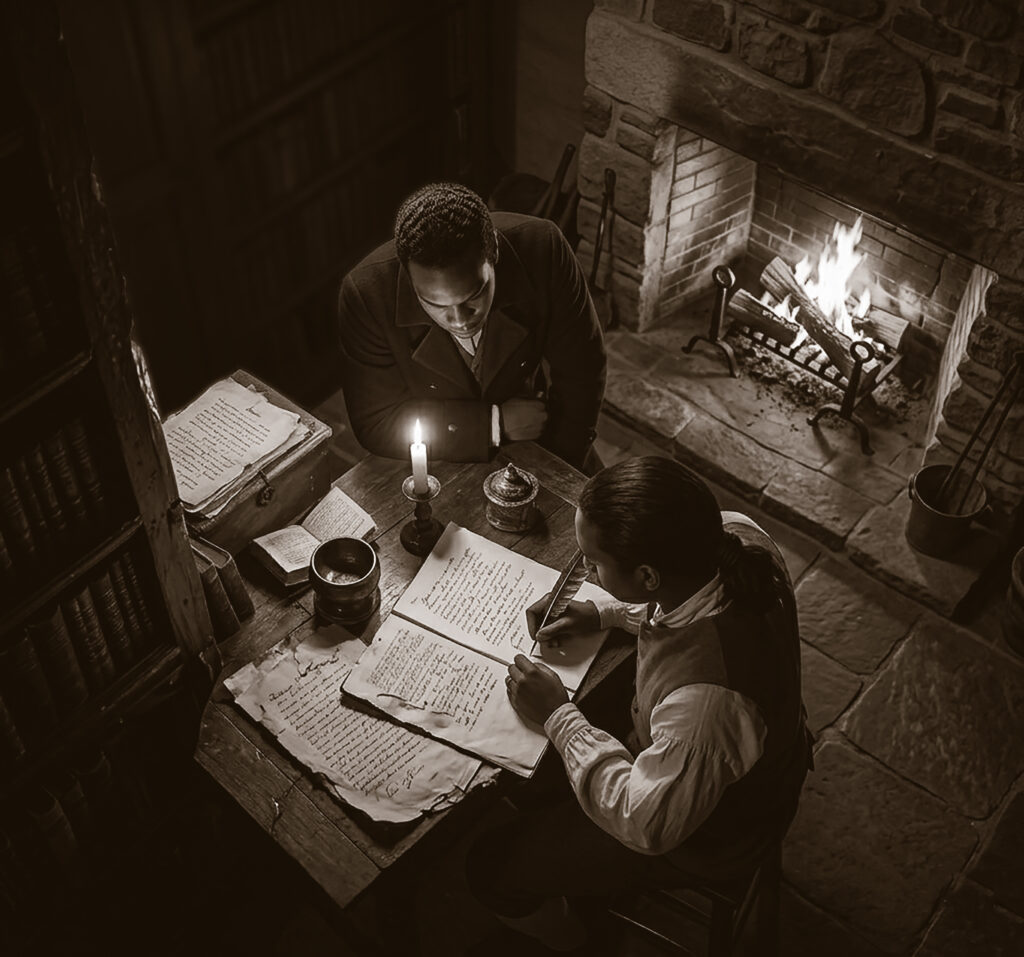
“No taxation without representation”
In February 1780, Paul and John Cuffe, brothers from Westport, submitted a petition to the Massachusetts legislature. The Cuffes were sons of a Wampanoag woman from Cape Cod and an Akan man, born in West Africa, sold into slavery in Massachusetts and later manumitted. Both brothers were born free, but because of their color, they could not vote. In their petition, they argued that ‘having no vote or influence in the election of those that tax us,’ they were subject to taxation without representation. In the petition they argued that “many of our colour have cheerfully entered the field of battle in defense of the Common Cause” and that “by reason of long bondage and hard slavery have been deprived of enjoying the profits of our labours or the advantage of inheriting estates from our parents as our neighbors, the white people do.”
Their petition is a significant contribution to the ongoing quest for equal rights. Even though the legislature denied the petition, it became part of the state records and may have influenced the Massachusetts State Constitution, adopted later in 1780, which granted all male citizens equal rights.
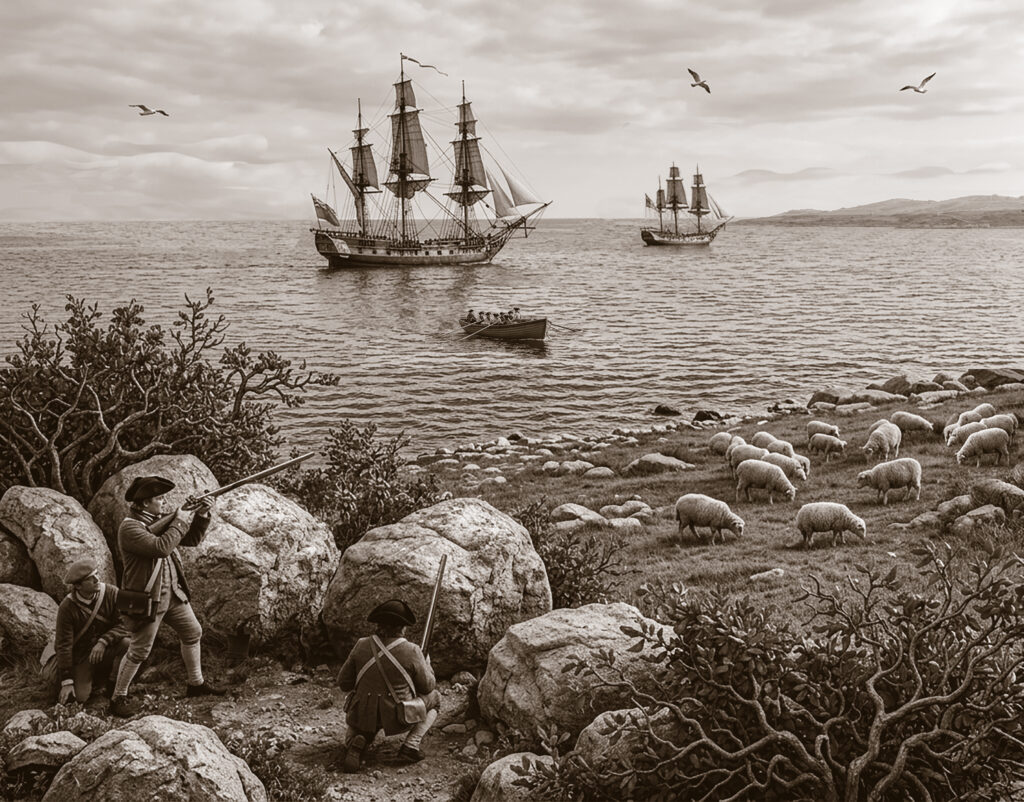
A Skirmish on Gooseberry
Westport militiamen described a brief “skirmish” with British soldiers who were in search of livestock on Gooseberry. The difficulty of obtaining fresh meat for the British soldiers was an ongoing challenge, and an effort was made to guard the shoreline to prevent the enemy from “committing depredations.” Soldiers were quartered in houses on Horseneck Beach and on Howland Road.
Although Westport was far from the major battles of the Revolution, it had a front row view of the British naval activities in Buzzards Bay. British naval vessels frequented the Elizabeth Islands in search of fresh meat for their soldiers. Cuttyhunk and Naushon Island’s Tarpaulin Cove were convenient and secluded locations for British vessels to pick up beef and mutton supplied by local loyalists for transport to Newport.
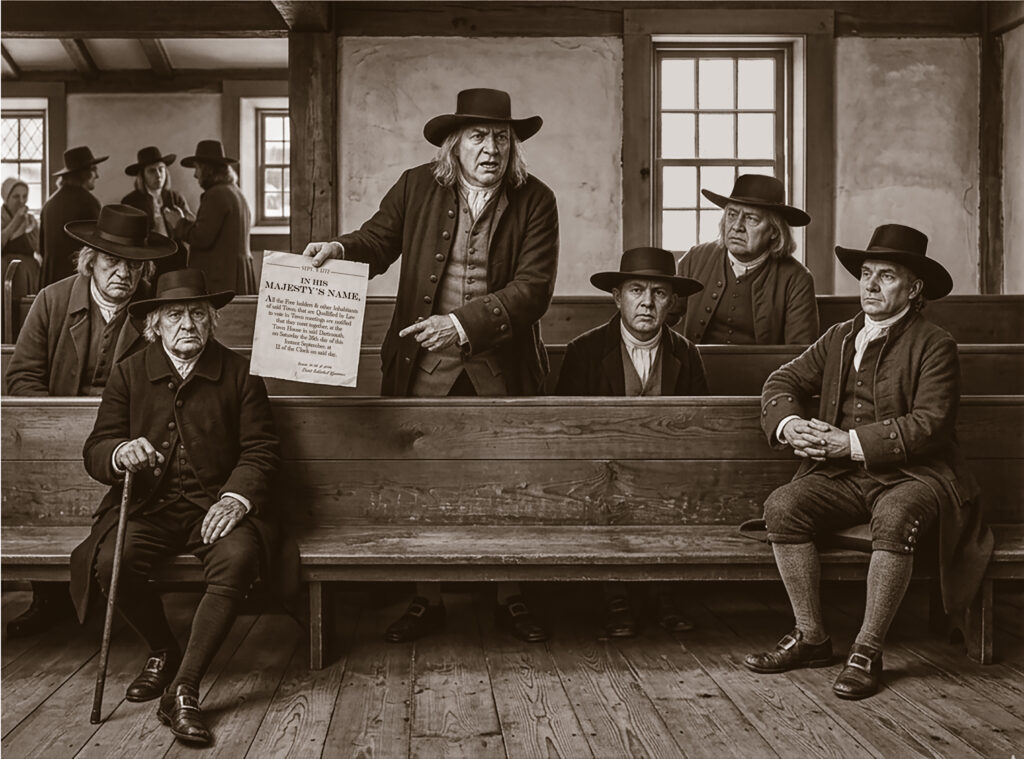
Quakers: Friend or Foe?
A seemingly insignificant protest by Dartmouth Quakers is an indication of the complex divisions generated by Quakers’ pacifist beliefs. In 1783, the Dartmouth Monthly Meeting filed a protest with the town objecting to the posting of town meeting notices on the doors of the meeting house, stating that these “disturb our meeting” and often concerned military matters with which their principles forbade them to have any concern. In response to their protest, the town selectmen questioned the Quakers loyalty and whether they intended “to be subject to our Commonwealth and Laws.”
The Revolutionary War divided communities and families. Although Quakers considered themselves “above the fray” of the war, to others their neutrality seemed traitorous.
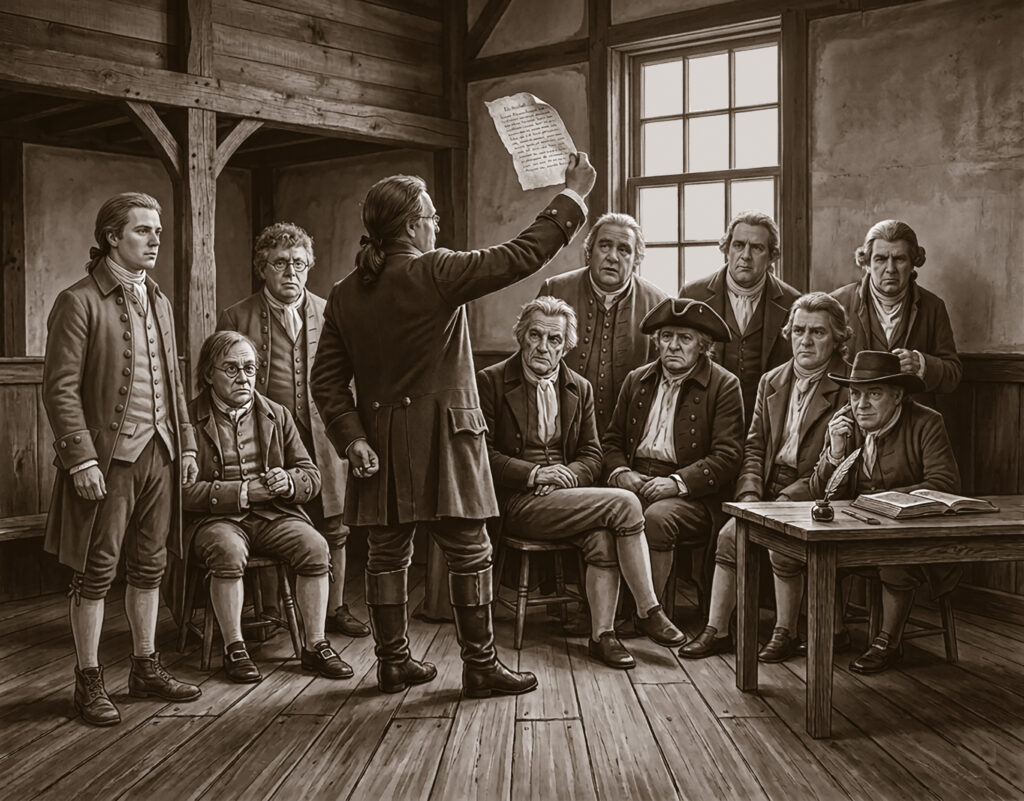
A War Won by Committee
Far from the battlefields of the Revolutionary War, a quieter battle took place. The conflict required each town to respond to the many pressures of military and political events. Dartmouth held town meetings to meet new, much more difficult challenges: the need to take a stand in political decisions farther afield, the request for militia, the request for food and clothing to supply patriots, and raising funds for the patriot war effort. They formed committees to deal with all logistical aspects of the war such as purchasing beef for the Continental Army. In 1780 a constitutional amendment committee reviewed the draft Massachusetts Constitution.
They proposed the following amendments:
- Religious Freedom: Individuals should not be forced to play for the support of a minister not of their own religion.
- Voting Rights: They opposed property qualifications for voters arguing such requirements were “inconsistent with the liberty we are contending for.”
- Quaker Accomodations: The town requested that oaths for public office be modified for Quakers, specifically objecting to the word “defend.”
- Article on Property: They proposed removing the clause that allowed the Legislature to increase property qualifications for office holders, noting that such power could be “dangerous to the liberties of the People.”
The American Revolution required every town and each inhabitant to participate in the formation of a new democracy. Town committees were part of a chain of communication, leading directly to the “Founding Fathers.” The voices of ordinary Old Dartmouth citizens helped shape this nation’s founding principles.
Bread and Cheese Brook
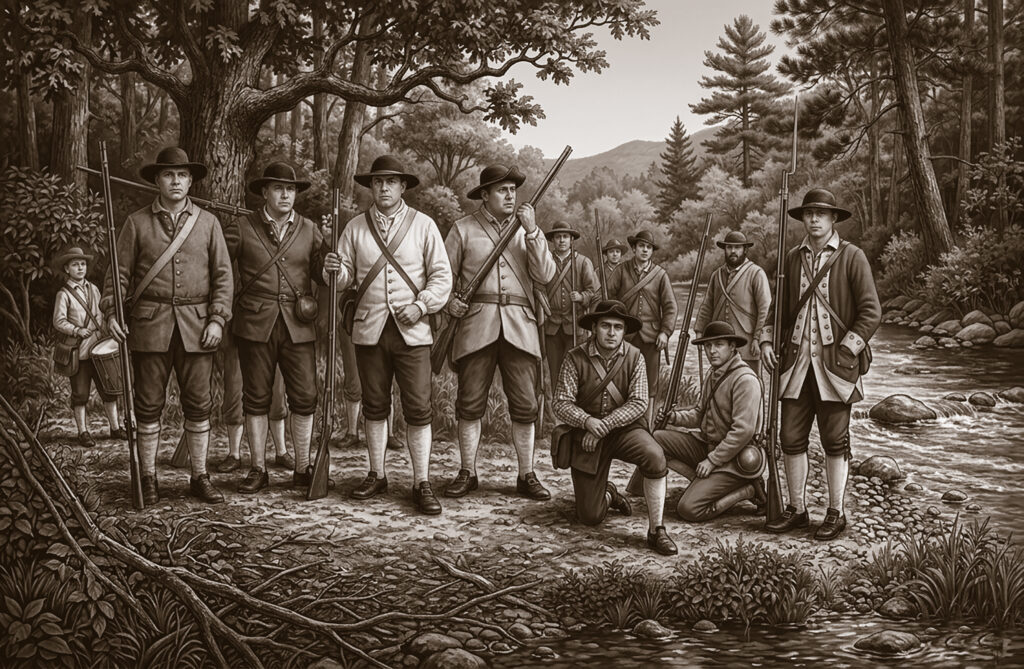
Bread and Cheese Brook flows from Fall River to the Westport River. In the 18th century, it provided waterpower for a grain mill and shingle mill. But what is the origin of its unusual name? A story handed down through time is that of a Westport militia, who quenched their thirst with its waters, and satisfied their hunger with some bread and cheese on the banks of the stream. Thus naming the stream Bread and Cheese Brook! No further information about the origins of its name has been found.
Did General Lafayette’s Soldiers Visit an Old County Road House?
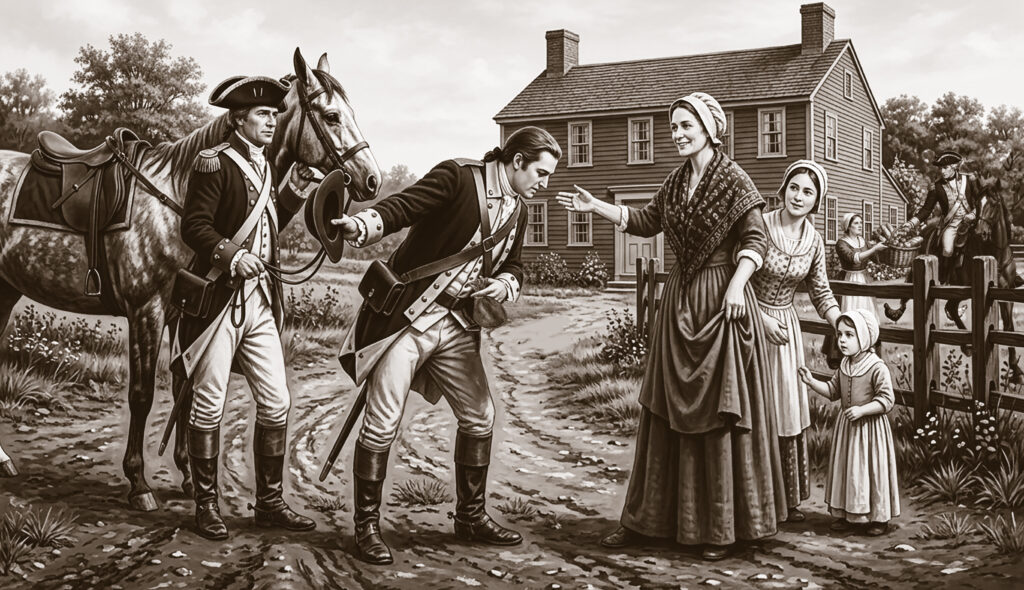
This story of a band of tired and hungry French soldiers stopping for refreshments at 365 Old County Road has been retold over the years. “Displaying the spirit of true New England hospitality, the housewife bade them welcome. From her bounteous supply of freshly cooked food she gave the soldiers refreshment to which they did ample justice without delay, leaving not even a scant supply for the family’s use at the morrow.”
The officer offered to pay for the food but his hostess replied “that the service which she had just rendered had been for her country and not for money.” As the band of soldiers took their leave, the officer “tossed a purse containing a sum of money large indeed for those days.”
Although the full details of this story may never be definitively confirmed, it is grounded in historical fact. In 1778, during the Battle of Rhode Island, General Lafayette and his troops did indeed move through this region (Tiverton, Little Compton, and Westport) while coordinating with French naval forces.
Paul Cuffe: Blockade Runner
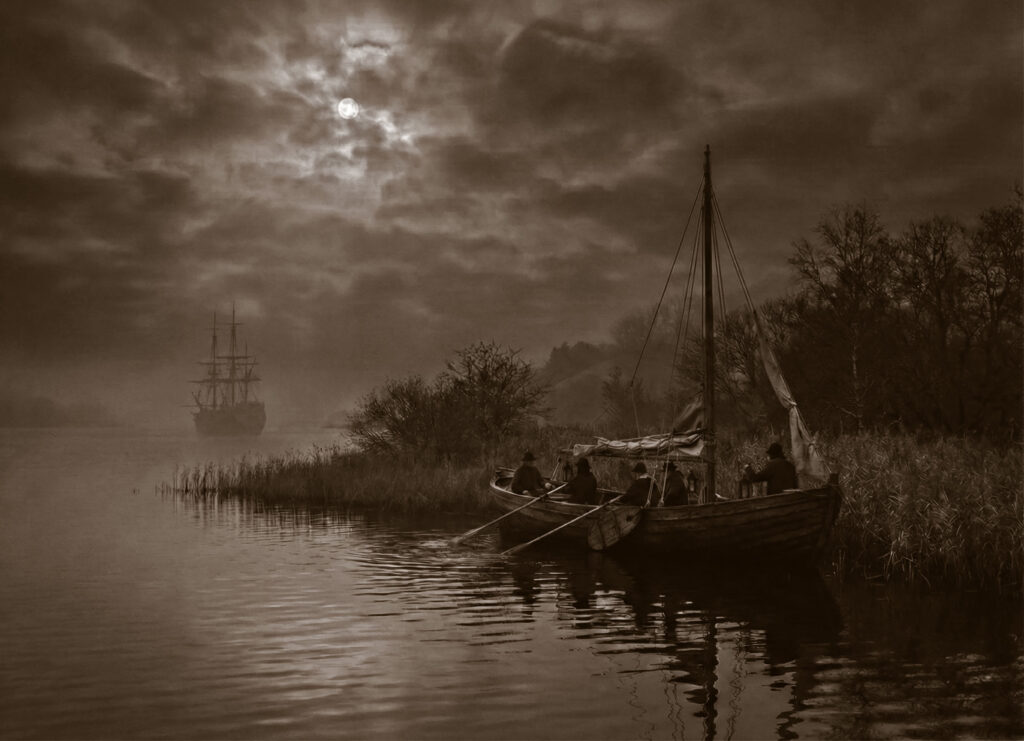
During the Revolutionary War, a young Paul Cuffe demonstrated great courage and maritime skill by delivering much needed supplies to the Quaker inhabitants of Nantucket who were under a blockade imposed by the British Navy. Cuffe built ships and transported goods from the Slocum River in Dartmouth across Buzzards Bay to the besieged island. On several of his attempted trips to Nantucket, he was apprehended by pirates, privateers and British naval vessels that took his cargos and sometimes his boats. However, over the six years of the War, he probably became much more knowledgeable of the risks and safe havens along this route and was able to make numerous successful trips delivering supplies to Nantucket and accumulating sufficient earnings to launch a coastal shipping business after the War ended.
Abner Brownell, Westport’s Paul Revere
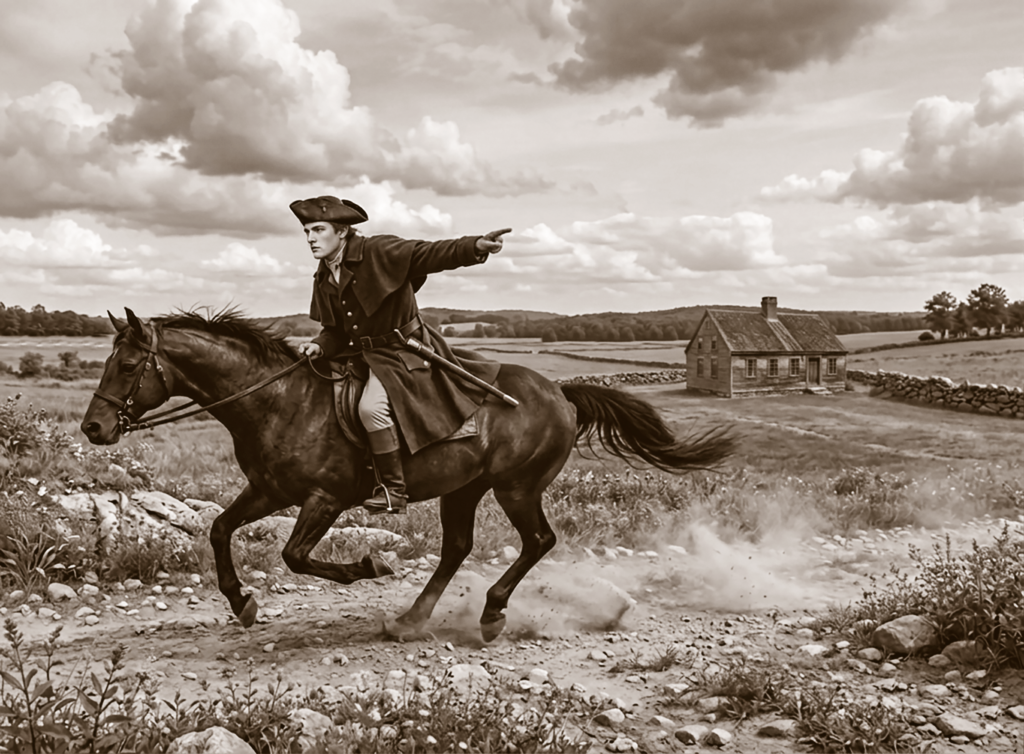
The story of Abner Brownell (1756-1851) – “Westport’s Paul Revere” – has been handed down through the generations. In April 1775, Abner Brownell “Came to tell the people of our town that war had begun, and that all the minutemen must start for Boston immediately. Now everything was hustle and bustle for within a few hours two companies of the Dartmouth minutemen were on their way to Boston.” The details of Abner Brownell’s ride are lost to history. As a Quaker, Abner Brownell was opposed to war, but as a young man he was equally attracted to “the honour and applause” and possibility of promotion. His participation was limited to a short enlistment “when the Britains took possession of Rhode island.”
Abner experienced a religious awakening after “witnessing a great Pestilence, of the Bloody Flux [dysentery] amongst the Inhabitants; Seeing so much Mortality, and Expecting that Soon it would be my Turn…I Seem’d to have an Earnest Desire in my heart, to Reform my Life.”